Health & Safety Consulting
Every organisation has its own risk profile, but they all share one responsibility: keeping people safe and operations resilient. At Wharton Sustainable Solutions, health & safety consulting means more than “passing an audit” – it’s about building a positive safety culture grounded in trust, competence and practical, preventive measures.

A Culture First Approach to Safety
“Organisations with a positive safety culture are characterized by communications founded on mutual trust, by shared perceptions of the importance of safety and by confidence in the efficacy of preventive measures.” That quote captures how Wharton looks at safety: as a culture, not a checklist.
Wharton Sustainable Solutions supports commercial buildings, construction sites, banks, warehouses, manufacturing units, mines, power and chemical plants, FMCG, hospitals, schools and offices across India with end to end health, safety, environmental and risk management consultancy. With experienced teams located across the country, Wharton is one of the leading providers of safety audits and specialised risk assessments for facilities of all sizes.
What Our Health & Safety Consulting Covers
Whether you’re high hazard or low risk, large enterprise or growing business, the fundamentals are the same: good health, safety and environmental practices, consistently applied. Wharton examines your facilities and activities from a safety and risk perspective, then prepares a clear, prioritised action plan to strengthen prevention, protection and emergency preparedness.
Core health & safety consulting services include:
• Safety Audit
• Electrical Safety Audit
• Fire Safety Audit
• Risk Assessment & HAZOP Study
• Safety Training
Safety Audits: Systematic, Critical and Practical
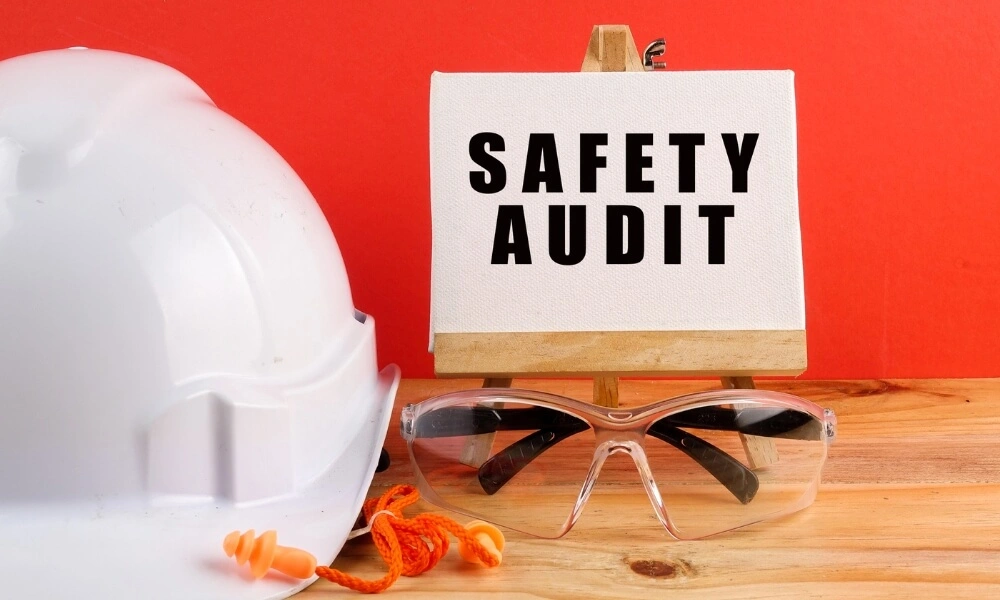
The main objective of a safety audit is to conduct a systematic, critical appraisal of all potential hazards involving personnel, plant, services and operational methods. The goal is to ensure your existing health and safety practices fully satisfy legal requirements – and that your employees genuinely feel safe coming to work.
- Safety management systems and safety policy implementation
- Fire and explosion prevention, protection and emergency management
- Work injury prevention and occupational health hazards
- Health hazard control, first aid practices and emergency plans
- Accident and near miss reporting, investigations and learning
- Contractors, vehicle safety and use of work equipment
- Display screen equipment, lifting operations and work at height
- Noise, hazardous substances, housekeeping and cleanliness
- Safety signs, information and communication, training and welfare provisions
- Conduct site inspections at mutually convenient times, covering physical areas and on site documentation
- Identify unsafe activities and hazardous conditions
- Analyse findings and prepare a report with observations, hazards identified and recommended remedial actions
- Discuss the report with facility management and agree a realistic schedule for corrective and preventive measures
Benefits you can expect:
- Stronger compliance and a safer working environment
- Improved employee morale and visible leadership commitment to safety
- Reduction in incidents, unplanned shutdowns and associated costs

Fire Safety Audits: Protecting Life and Property
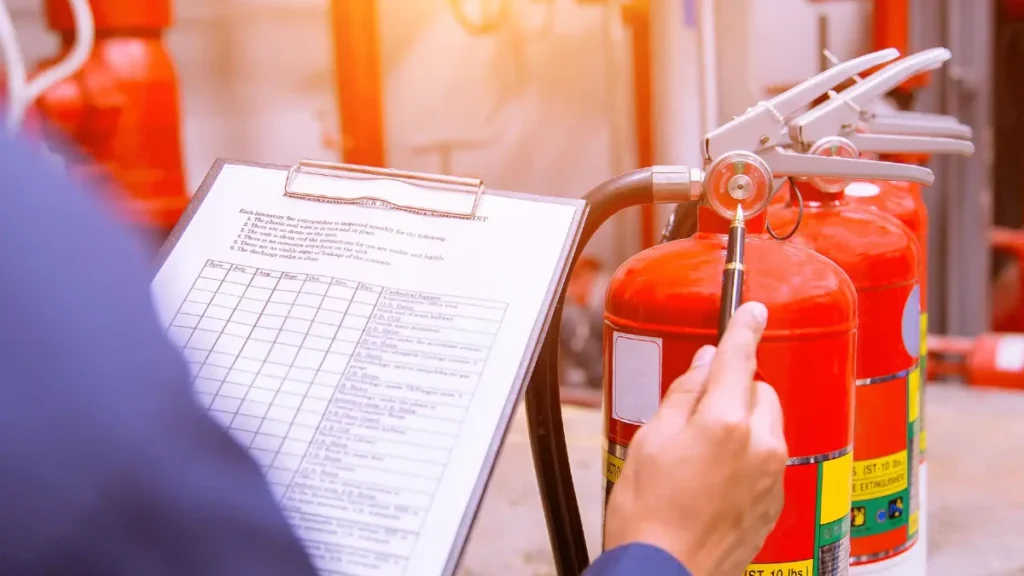
Any fire has the potential to cause severe damage to both life and property, especially in complex facilities. Fire safety audits are one of the most effective tools for assessing the fire safety standards of your building or plant and for strengthening emergency preparedness.
Wharton conducts fire safety audits for high rise buildings, hotels, banks, hospitals, schools, residential complexes, small, medium and large scale industries, chemical plants, power plants, FMCG, moulding units, mines and more. Audits are carried out in line with relevant IS standards, the National Building Code 2005 and applicable codes for automatic detection, alarm systems, extinguishers and fire safety in buildings.
- Identification and control of ignition sources in areas where flammable chemicals are stored, handled or transferred
- Review of chemical compatibility in storage areas and fire loss control measures
- Review of electrical hazards that are potential causes of fire
- Assessment of fire detection and alarm systems, with improvement recommendations
- Review of active protection (hydrants, sprinklers, portable extinguishers) and passive protection
- Evaluation of emergency fire systems, evacuation procedures and mock drills
- Review of contractor safety awareness and employees’ fire safety training and communication
Electrical Safety Audits: Addressing a Major Fire Cause

- Verification of statutory compliance with Indian electricity standards
- Physical inspection to identify electrical hazards such as shock, fire, explosion and overloading
- Review of lightning protection systems and static electricity hazards
- Review of hazardous area classification and selection of flameproof equipment
- Assessment of electrical preventive maintenance, testing and documentation
- Review of electrical accidents and near misses to identify root causes
- Evaluation of work permits, interlocks, lockout/tagout procedures and overall emphasis on electrical safety in company policy and safety committees
- Assessment of insulation integrity, earthing systems and overloading through sample tests and measurements
- Hotspot detection using infrared equipment/thermal imaging where necessary
Thermography: Seeing Problems Before They Fail
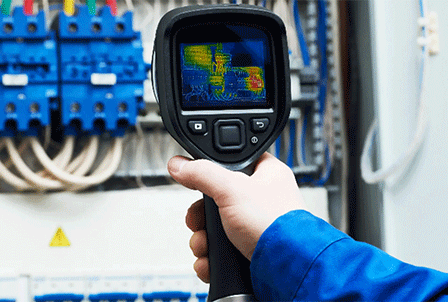
Electrical thermography can detect:
- Hotspots and loose connections in fuse boards, distribution boards and busbar systems
- Abnormal heating in control panels, switchgear, transformers, DG sets, motors, UPS and battery systems
- Overloaded circuits, defective components and insulation issues in high and medium voltage systems
Mechanical thermography helps identify:
- Misalignment and imbalance
- Machine and component looseness
- Damaged shafts, vanes and blades
- Bearing defects, cracks and spalls
- Gear defects and improper lubrication
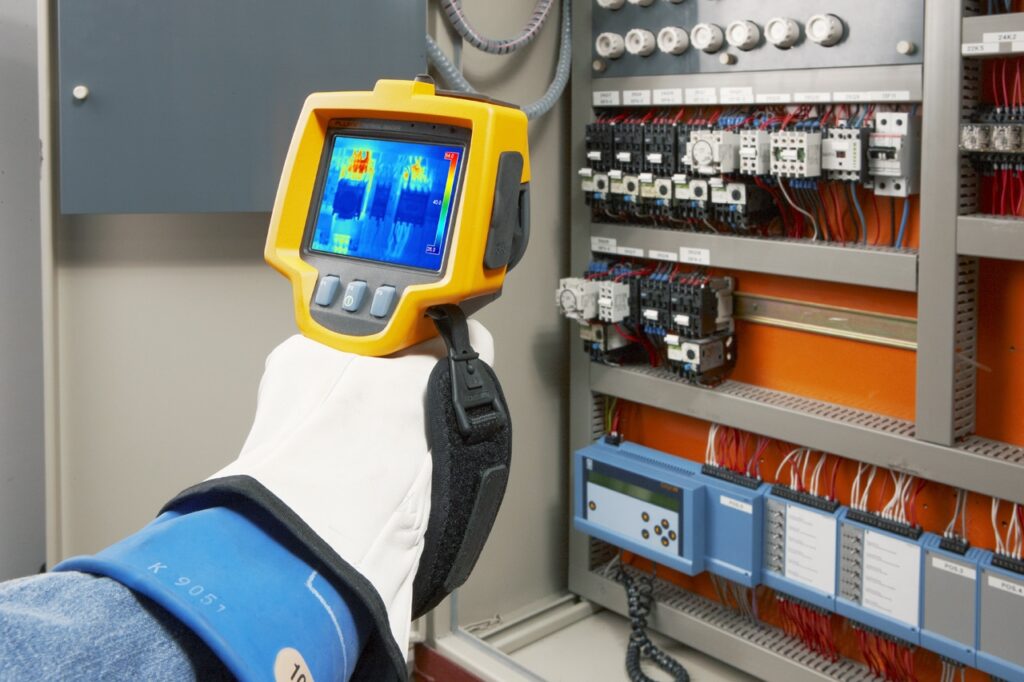
Thermography is also used to locate under floor heating pipework, check system efficiency and identify leaks, as well as to assess refractory and insulation degradation in boilers, furnaces, burners and ovens. By tracing, quantifying and trending faults, Wharton enables management teams to plan repairs during scheduled stoppages instead of reacting to sudden failures and potential fires.
Water Audit & Water Balancing Studies
Water is a finite national resource, yet demand keeps rising with industrialisation, urbanisation and higher living standards. Unabated discharge of effluents and wasteful use of fresh water make efficient water management a business and environmental imperative.
Wharton Sustainable Solutions is a leading consultancy for water audits and water balancing studies, working with railways, process industries, municipal corporations, buildings, housing societies, power plants, hospitals, institutes and various industries across India.

- How water is being consumed in your facility
- Where water is being wasted (for example, leakages or inefficient processes
- How you can reduce or prevent usage through process changes or equipment upgrades
- How to recycle existing water and adopt new technologies for lower consumption
- What a practical water conservation plan for your site should look like
Frequently Asked Questions
Yes. Even low risk environments can face incidents from slips, trips, electrical faults or poor ergonomics; a structured safety audit helps you meet legal duties and reassure employees.
Audits are scheduled at mutually convenient times and are usually conducted while operations continue, provided it’s safe, so that the real world risk profile of your facility can be understood without unnecessary disruption.
Yes. Wharton not only performs audits and risk assessments but also designs and delivers targeted safety training to help your teams understand hazards, follow procedures and sustain improvements over time.
Safety isn’t a one time project; it’s the way an organisation chooses to operate, day in and day out. With experienced consultants, advanced diagnostic tools and pan India coverage, Wharton Sustainable Solutions partners with you to build stronger systems, safer workplaces and greater confidence among employees, regulators and stakeholders.